Inheriting California Property in 2026: Why Proposition 19 Makes Your Living Trust More Critical Than Ever
Proposition 19 changed the rules. Most California families don't know it yet — but a missed deadline or the wrong trust could cost their heirs the family home. Here's what you need to know in 2026.
Why 2026 Is the Best Year to Set Up Your Revocable Living Trust — And What Happens If You Don't
If you have been putting off estate planning, 2026 is a critical year to act. Between expanding federal tax exemptions and backlogged probate courts that can freeze assets for 18 months or more, a Revocable Living Trust is the most effective way to ensure smooth asset management, total privacy, and immediate financial protection for your loved ones
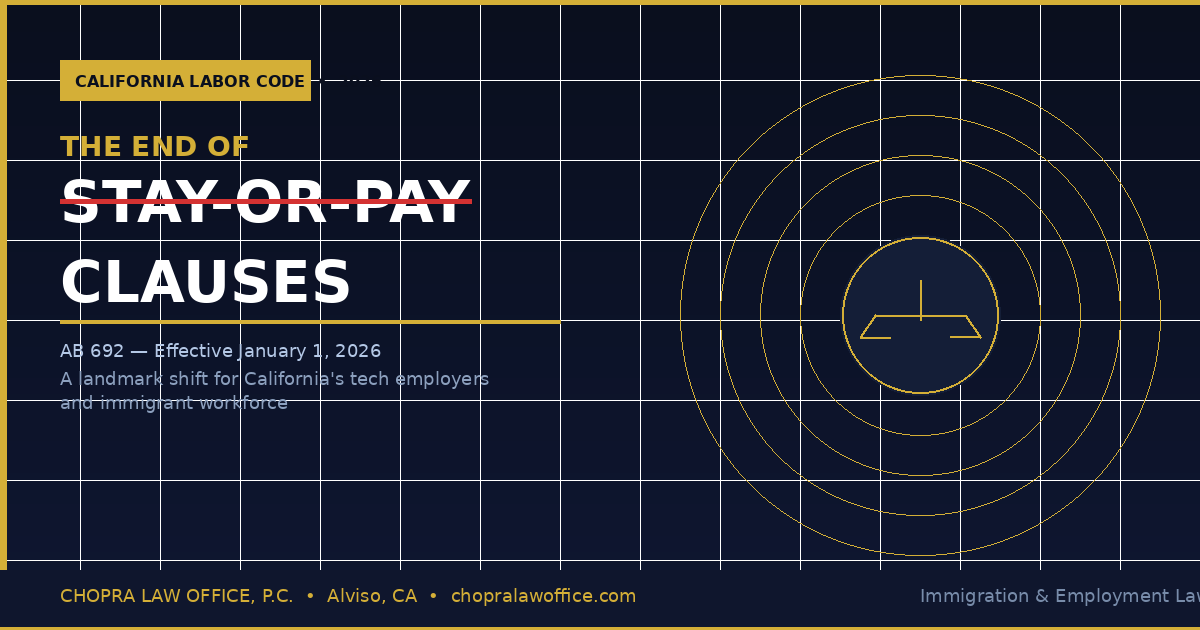
The Death of the 'Stay-or-Pay' Clause
California's AB 692, effective January 1, 2026, has permanently dismantled the "Stay-or-Pay" clause — long used by Silicon Valley employers to bill departing H-1B, O-1, and L-1 visa holders tens of thousands of dollars in immigration fees. In a sweeping amendment to the California Labor Code, the legislature has classified these repayment agreements as an unlawful restraint on worker mobility, closing the final loopholes that federal law left open. For immigrant professionals, it means the freedom to change employers without the threat of a crippling exit bill. For HR and legal teams, it means existing contracts need an immediate audit. This article breaks down exactly what changed, what's still enforceable, and how both sides of the employment table should respond in 2026.
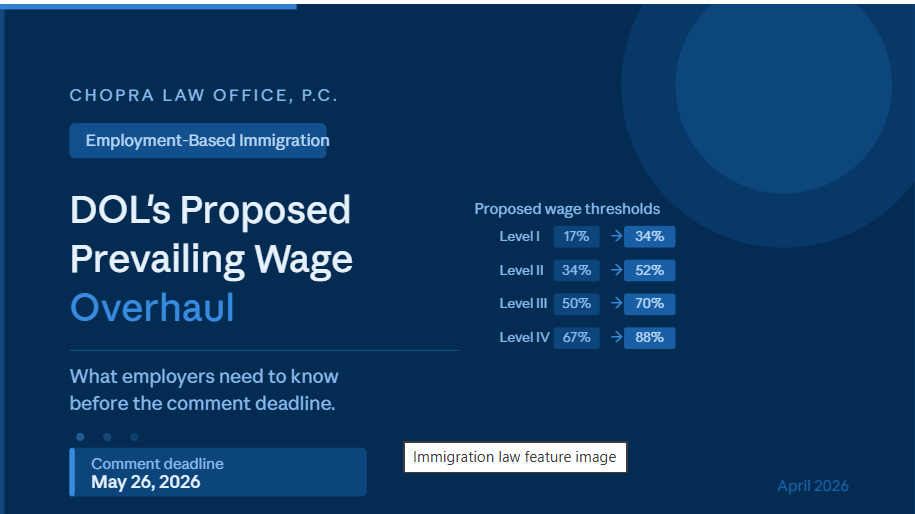
DOL's Proposed Prevailing Wage Overhaul: What Employers Need to Know Before the May 26 Deadline
The U.S. Department of Labor is proposing the most significant overhaul to H-1B and PERM prevailing wage thresholds in over two decades — with public comments due by May 26, 2026. The proposed rule would raise all four wage tiers sharply, with Level I jumping from the 17th to the 34th percentile and Level IV climbing to the 88th. Employers sponsoring foreign workers through H-1B or PERM should assess their exposure now — before the rule is finalized and the comment window closes.
The AI Word at the Door: How Artificial Intelligence Is Now the First Gatekeeper of Your Immigration Case
The AI Word at the Door — Before a human officer ever opens your immigration file, an algorithm already has. Through its officially published AI Use Case Inventory, the U.S. Department of Homeland Security has confirmed that artificial intelligence is now embedded across nearly every stage of USCIS processing — scanning your evidence, reading your asylum narrative, verifying your face, and flagging inconsistencies for fraud review. With over 158 active AI applications across DHS and 29 directly impacting immigration cases, the stakes for how you prepare and present your petition have never been higher. At Chopra Law Firm, we break down exactly which systems are at work, what they mean for your rights, and why sharp, informed legal counsel is now your most essential tool in an AI-filtered system.
The Future of Birthright Citizenship Is Before the Supreme Court — What It Means for Your Family
On April 1, 2026, the U.S. Supreme Court heard oral arguments in Trump v. Barbara — a landmark case that could redefine who is considered a U.S. citizen at birth. President Trump's executive order, signed on Day 1 of his second term, seeks to end automatic citizenship for children born to undocumented parents or those on temporary visas. Every federal court has blocked it — and a majority of Supreme Court justices appeared skeptical. A ruling is expected by late June 2026. Here's what you need to know, and what steps your family should take right now